1979
One-of-a-Kind
Verified
Volkswagen Escarabajo
Desconocido · Sedan
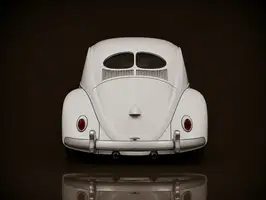
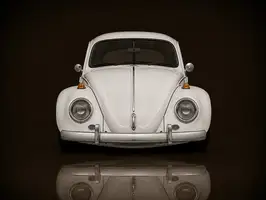
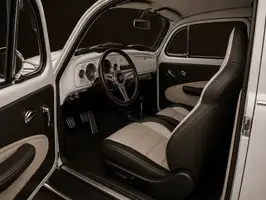
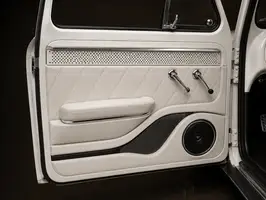
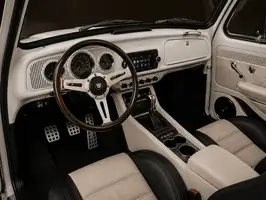
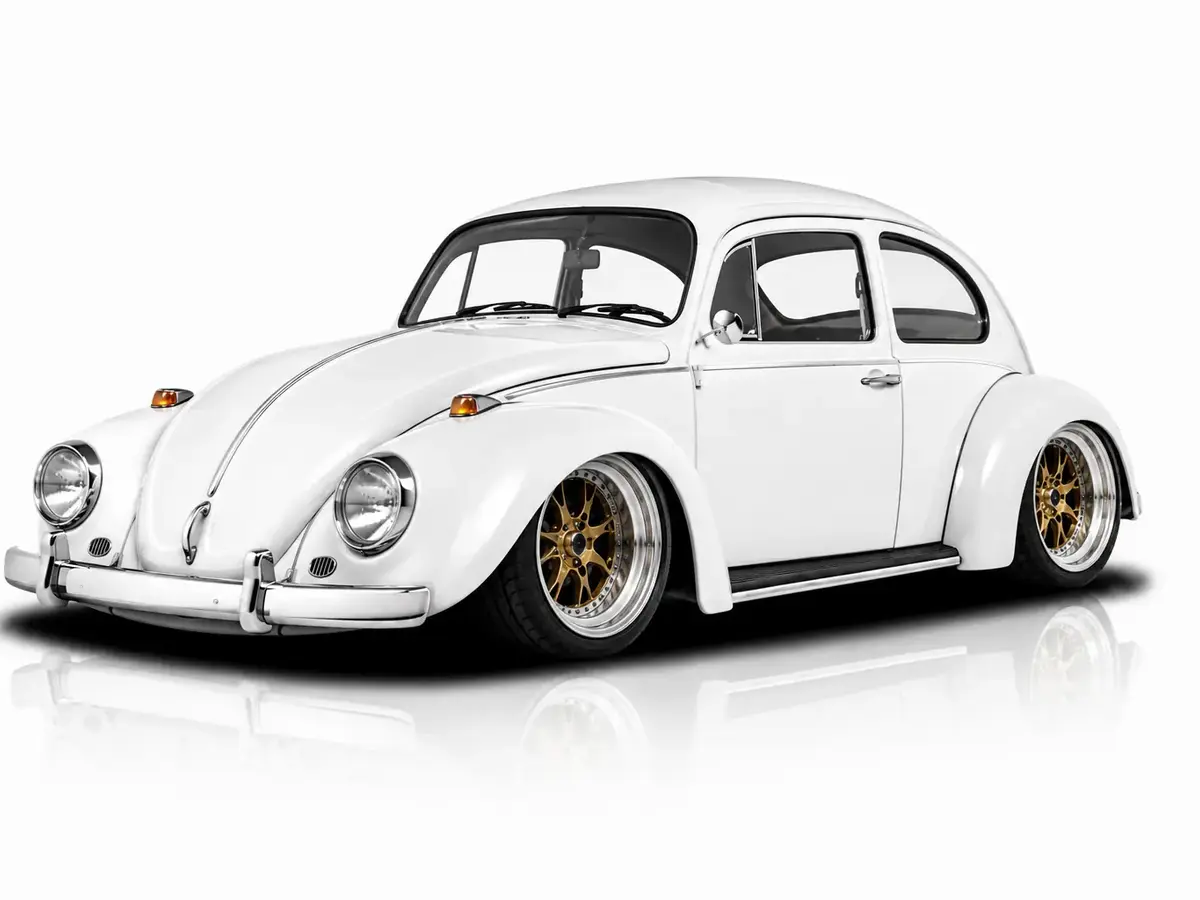
Se vende Volkswagen Beetle (Escarabajo) modelo 1979, en buen estado general. 🔧 recién reparado, estructura en buenas condiciones. 📄 SOAT y tecnomecánica al día. 💰 Impuestos al día. 🛞 Llantas al 80% de vida útil. Michelin 📝 Listo para traspasos, sin inconvenientes legales.
$25 000 000
⭐ 4.9 · 142 reviews · Featured Build
✓ Perfect for
- Show-quality collectors
- Air‑cooled purists
- Documentation lovers
✗ Not for
- Daily commuting
- Budget buyers
- Family haulers
Mileage1 mi
Horsepower48 HP
TransmissionManual
volkswagen escarabajo 1979 — what it actually is, and what it isn’t
The 1979 Volkswagen Escarabajo sits at the tail end of a long production run that started in the 1930s. By ’79, this car wasn’t cutting-edge, wasn’t refined, and wasn’t pretending to be anything more than basic transportation. In Mexico, production kept going for decades after Germany stopped, so the 1979 version you’re dealing with is already a late-stage evolution of a design that had been stretched as far as it could go.
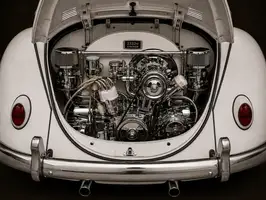
You’re looking at an air-cooled, rear-engine, rear-wheel-drive car with around 48 horsepower in most 1600cc configurations. No radiator. No water pump. No modern crash structure. It’s simple. That’s the whole pitch.
But “simple” doesn’t automatically mean “good.” It means fewer parts to break, but also fewer systems doing any real work to protect you or improve performance.
what you’re buying, mechanically
By 1979, most Escarabajos came with the 1600cc dual-port engine. That matters, because earlier single-port engines behave differently. The dual-port breathes better and feels slightly less choked at higher RPMs.
Specs, roughly:
- Engine: 1584cc air-cooled flat-four
- Power: ~48 hp @ 4,200 rpm
- Torque: ~78 lb-ft
- Transmission: 4-speed manual
- Carburetor: Solex 34 PICT-3 (in many markets)
- Cooling: Fan-driven air cooling, no liquid system
- Electrical: 12-volt system (post-1967 standard)
No fuel injection here unless someone retrofitted it. It’s carbureted, and that means cold starts can be rough if it’s not tuned correctly.
One real-world example: a stock 1979 Escarabajo in Bogotá will struggle on steep grades if it’s loaded with two passengers and gear. Not because something’s wrong—because 48 horsepower is all it has.
driving it in real conditions
This isn’t a car you “drive fast.” It’s a car you manage.
Acceleration is slow. 0–100 km/h can take 20 seconds or more depending on altitude and condition. Highway merging requires planning. Passing on two-lane roads can turn into a gamble if you misjudge distance.
But it does have a few traits people forget:
- The rear-engine layout gives solid traction off the line
- It’s narrow, easy to place in tight streets
- The turning radius is tight enough for city driving
At low speeds, it feels fine. At higher speeds, it starts to feel loose. Crosswinds affect it. The front end gets light above 100 km/h.
Steering is manual. No assist. At parking speeds, it’s heavy. Once moving, it loosens up.
Brakes? Front discs in later models, drums in the rear. They work, but they’re not forgiving if neglected. A poorly adjusted drum setup will pull to one side under braking.
interior and usability
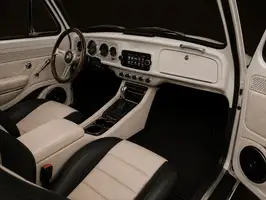
There’s no hiding it. The interior is basic.
Flat seats. Minimal bolstering. Vinyl or simple cloth. No sound insulation worth mentioning. You hear the engine because it’s right behind you, separated by a thin firewall.
Features are limited:
- Manual windows
- Basic heater (which depends on engine heat and often barely works)
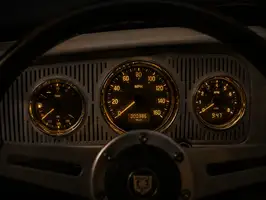
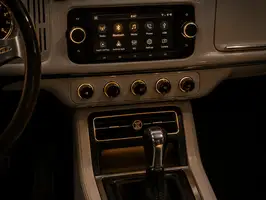
- Simple gauge cluster: speedometer, fuel gauge, maybe warning lights
- No AC unless aftermarket
The heater is a known weak point. It uses heat exchangers around the exhaust system. If those are rusted or missing, you get no heat. Or worse, exhaust fumes.
Anecdote: a 1979 Escarabajo in Medellín had its heater channels rusted through. Owner tried to fix it with sheet metal patches and silicone. Result was hot air mixed with exhaust smell entering the cabin. That’s not rare. That’s typical if the car hasn’t been restored properly.
reliability — what people get wrong
People call these cars “bulletproof.” That’s lazy thinking.
They’re simple. That’s different.
A well-maintained Escarabajo can run for decades. But it requires regular attention:
- Valve adjustments every 5,000–8,000 km
- Oil changes every 3,000 km (no filter in early systems, just a screen)
- Carburetor tuning
- Ignition timing checks
Ignore those, and the engine won’t last.
The air-cooled design has no margin for overheating. If the cooling tin is missing or the fan belt breaks, engine temps spike fast. You won’t get a warning light in time.
Common failures:
- Oil leaks from pushrod tubes and seals
- Worn carburetors causing rough idle
- Generator or alternator failure
- Clutch cable snapping without warning
These aren’t rare events. They’re expected maintenance points.
parts availability and cost
This is one area where the Escarabajo still makes sense.
Parts are widely available in Latin America, especially Mexico and Colombia. You can find:
- Complete engine rebuild kits
- Carburetors and rebuild kits
- Brake components
- Suspension bushings
Prices are low compared to modern cars.
Example pricing (approximate in USD equivalent):
- Engine rebuild kit: $400–$800
- Carburetor rebuild kit: $20–$50
- Brake shoes: $30–$60
- Clutch kit: $100–$200
Labor is also straightforward. Most mechanics who’ve worked on older cars can handle it.
But there’s a catch: quality varies. Cheap aftermarket parts fail early. A $25 carb rebuild kit can last six months if it’s poorly made.
rust — the real enemy
Forget the engine for a minute. Rust is what kills these cars.
Critical areas:
- Floor pans
- Heater channels
- Rear torsion housing
- Front frame head
If those are compromised, repairs get expensive fast. You’re cutting, welding, aligning. Not a simple bolt-on job.
A shiny paint job hides rust well. People get fooled by this all the time.
Specific example: a 1979 Escarabajo sold in Cali looked clean from the outside. Once the carpet was pulled, both floor pans had been patched with thin sheet metal riveted over rust. Not welded. That’s structural weakness.
safety — no illusions here
This is where the car falls apart by modern standards.
No airbags.
No crumple zones designed with modern engineering.
No ABS.
No traction control.
The structure is basic. In a collision with a modern SUV, the Escarabajo loses. Every time.
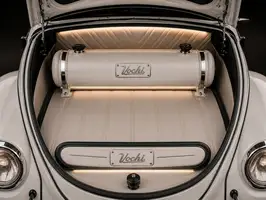
Even the fuel tank location (front trunk area) is not ideal in a frontal impact.
Seatbelts exist, but they’re basic. Some models still had inertia reels, but nothing advanced.
If safety matters in any real sense, this car doesn’t meet that requirement.
fuel economy
Fuel economy is decent, not impressive.
- Around 10–12 km/L in mixed driving
- Worse at high altitude or poor tuning
Carbureted engines don’t optimize fuel well. A slightly rich mixture will drop efficiency quickly.
Also, ethanol-blended fuels can cause issues with older fuel lines and carb components if not upgraded.
modification potential
This is where the Escarabajo still earns attention.
The platform is easy to modify:
- Engine upgrades: 1776cc, 1915cc builds are common
- Dual carb setups
- Performance exhaust systems
- Suspension lifts for Baja builds
A stock 1600cc can be boring. A built 1776cc with dual carbs feels like a different car.
But upgrades introduce trade-offs:
- More power = more heat
- Higher stress on stock components
- Reduced reliability if poorly built
A cheap performance build fails faster than a stock engine that’s maintained properly.
real-world ownership example
A 1979 Escarabajo used as a daily driver in Medellín:
- Weekly fuel cost: low
- Monthly maintenance: unpredictable
- Downtime: 1–2 days per month on average
Owner replaced:
- Clutch cable twice in one year
- Carburetor once
- Rear brake cylinders
Total yearly maintenance cost ended up around $800–$1,200. Not expensive, but not “nothing” either.
The car never left him stranded long-term. But it demanded attention constantly.
the reality behind the reputation
The Escarabajo’s reputation comes from its simplicity and long production run. That doesn’t mean it’s better than modern cars. It means it survived in markets where simplicity mattered more than performance or safety.
A 1979 model is not rare. It’s not inherently valuable unless restored correctly. And “restored correctly” usually means more money than the car will ever be worth on resale.
final assessment without the fluff
The 1979 Volkswagen Escarabajo is a basic machine that still works because it hasn’t changed much since the 1960s. That’s both its strength and its limitation.
It will run with minimal resources. It will also demand constant attention. It’s cheap to fix, but it always needs fixing.
You don’t buy it for comfort or safety. You buy it because you accept its limitations and want a machine you can understand completely.
That’s the trade.