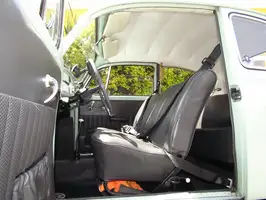
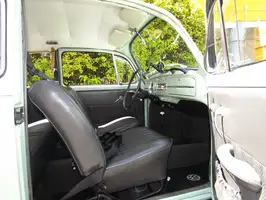
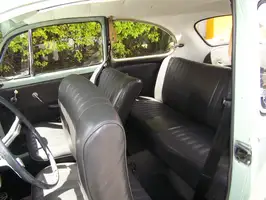
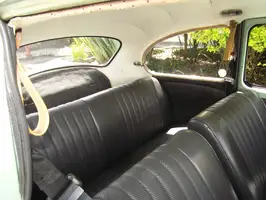
1966
One-of-a-Kind
Verified
Volkswagen Escarabajo
1300 · Sedan
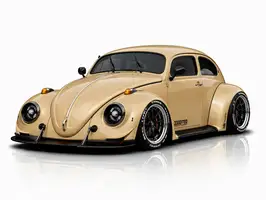
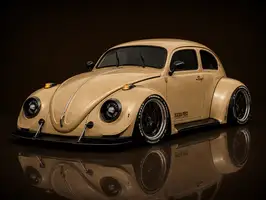
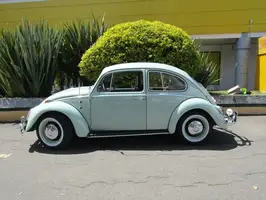
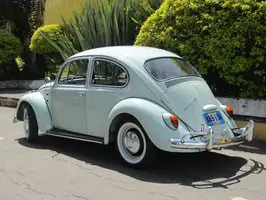
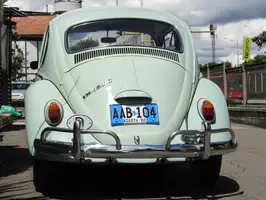
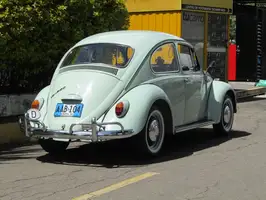
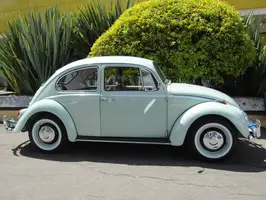
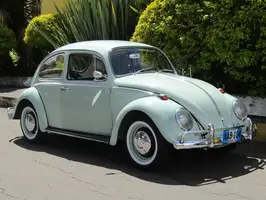
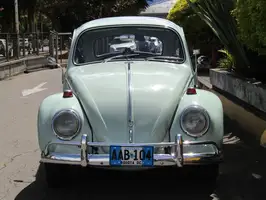
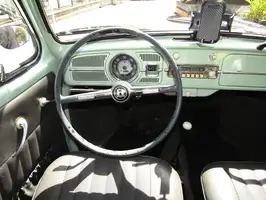
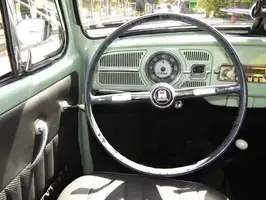
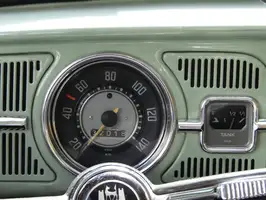
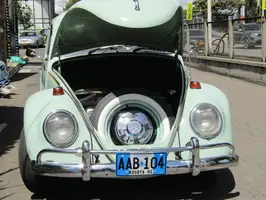
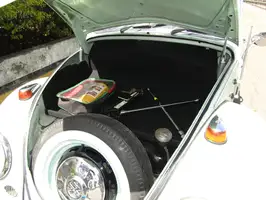
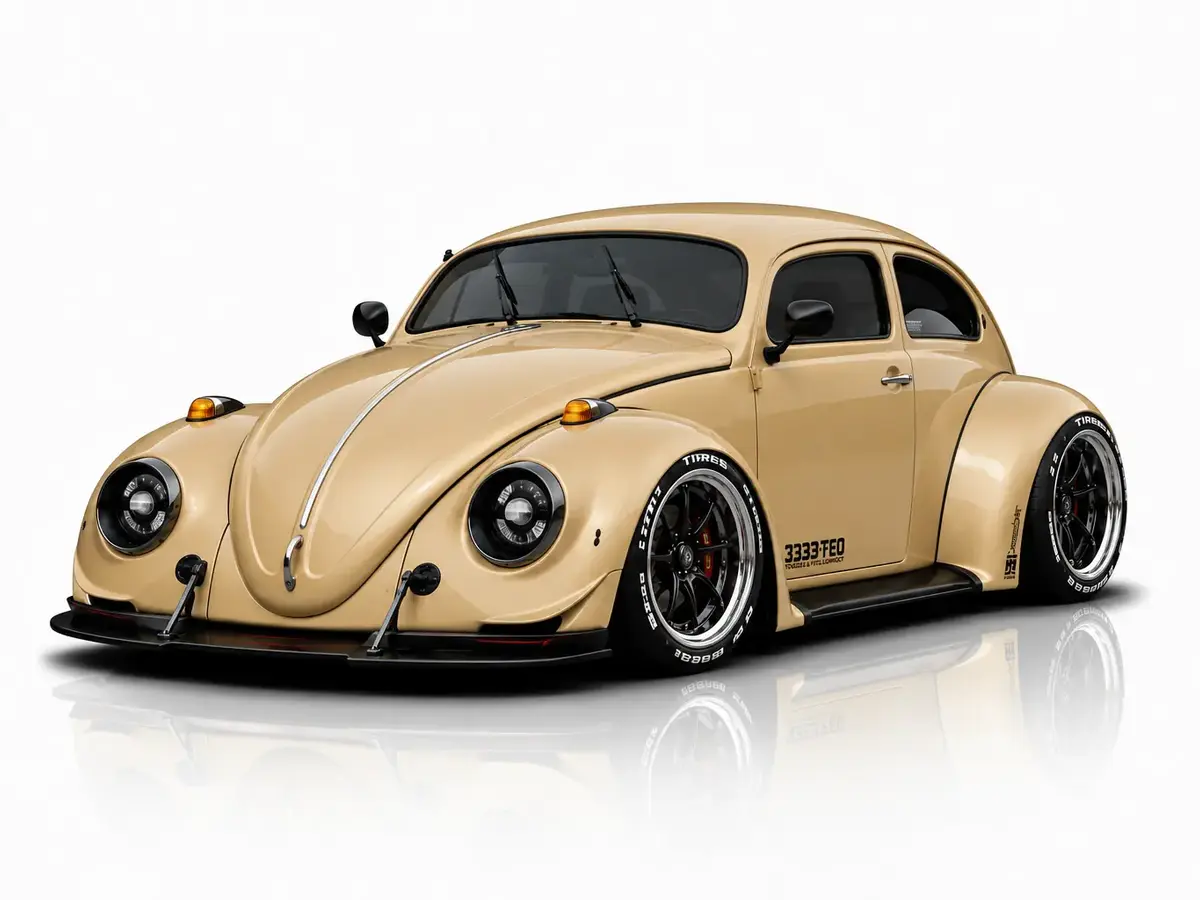
This custom 1966 VW Beetle pairs clean, timeless styling with serious performance upgrades. Its bright white finish is complemented by wide fiberglass fenders that create a confident, road-hugging stance, while black custom wheels add a modern, aggressive contrast. At its heart is a professionally built 2275cc air-cooled Volkswagen engine, delivering the power and responsiveness to make this classic Beetle as exciting behind the wheel as it is on display.
$38 000 000
⭐ 4.9 · 142 reviews · Featured Build
✓ Perfect for
- Show-quality collectors
- Air‑cooled purists
- Documentation lovers
✗ Not for
- Daily commuting
- Budget buyers
- Family haulers
Mileage1 mi
Horsepower185 HP
TransmissionManual
volkswagen escarabajo 1966 — what ownership actually looks like
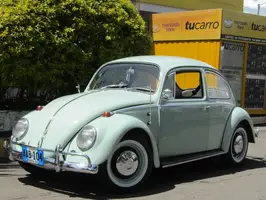
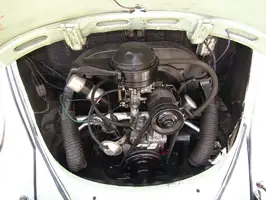
The 1966 Volkswagen Beetle 1966 is an early air-cooled car with no buffer between you and the mechanics. It runs a 1300cc single-port engine at roughly 50 horsepower. Carburetor, points ignition, mechanical fuel pump. About 1,700 lbs.
That combination worked in the 1960s. It struggles in modern traffic.
how it performs in real use
A healthy stock engine does 0–60 mph in about 20 seconds. That’s not worn-out numbers. That’s normal.
Highway speed sits around 60–65 mph if you want the engine to last. At 70 mph, oil temperature rises and the engine starts to feel strained. It’ll do it, but you’re shortening its life.
Braking is four-wheel drum. When adjusted properly, it stops straight. After repeated stops, the pedal travel increases and stopping distance grows. That’s fade.
Steering is light. At speed, the front end doesn’t feel planted. Crosswinds move the car more than you expect.
how often it needs work
Every 3,000 miles:
- valve adjustment
- oil change
The engine holds about 2.5 quarts. No full-flow oil filter unless modified.
Ignition points wear down. Condensers fail without warning. Carburetors drift out of tune with temperature and altitude.
Wiring becomes unreliable with age. Insulation cracks. Grounds weaken. Electrical issues show up as intermittent failures.
Rust is structural. Floor pans and heater channels carry load. Once rusted, the body flexes. Repairs involve cutting and welding, not patching.
can it function like a modern car
Not in stock form.
It lacks acceleration for merging, braking capacity for repeated stops, and any real crash protection. No airbags. No reinforced cabin. No modern restraints.
To get close to modern usability, you rebuild multiple systems. Leaving any one stock creates a weak point.
engine upgrades that make a difference
A 1776cc build is the standard starting point. Same engine case, larger pistons and cylinders. Power increases to about 75–90 horsepower. Cost ranges from $3,000 to $6,000 depending on parts and machine work.
That upgrade allows steady highway driving.
A 1915cc or 2110cc engine produces 100–140 horsepower. Now the car keeps up with traffic. Heat becomes the limiting factor. Poor builds overheat and fail early.
Parts typically come from CB Performance or EMPI. Lower-cost parts often have shorter service life. Cylinder heads crack. Carburetors lose synchronization.
braking and suspension changes that fix real problems
Front disc brake conversion is standard for a daily driver. Cost runs $400–$800. It removes most fade issues.
Rear suspension uses a swing axle design. Under hard cornering, the outside wheel tucks inward. That’s built into the geometry. A camber compensator reduces the effect. An IRS conversion removes it but requires fabrication or a later chassis.
Shocks, bushings, and steering components wear out. Replacing them tightens the car but doesn’t make it modern.
transmission and gearing limits
Stock gearing keeps engine speed high. Around 3,500–4,000 RPM at 65 mph. That increases wear and noise.
A “freeway flyer” transmission reduces RPM at highway speed. Cost sits between $1,200 and $2,000.
Without it, long drives feel strained.
what it costs to make one usable
A build completed in San Diego in 2022:
- 1776cc engine: $4,000
- front disc brakes: $550
- wiring harness replacement: $500
- suspension rebuild: $850
- transmission rebuild with taller gearing: $1,400
Total: about $7,300.
Before the work, the car struggled at 55 mph and wandered under braking. After the work, it held 70 mph and stopped straight.
one example that shows the failure points
A ’66 came into a shop in Phoenix in 2021.
Compression numbers were uneven: 120, 110, 85, 80 psi. Rear brake shoes were contaminated with gear oil from leaking axle seals. Brake lines were original.
The owner drove it daily.
Repairs:
- engine rebuild to 1776cc: $3,800
- full brake system replacement: $800
- axle seal repair: $300
After repairs, the car tracked straight and maintained highway speed. Before that, it was unreliable and unsafe.
strengths that still matter
The engine is simple. You can remove it with basic tools in under an hour.
Parts availability remains strong. Most components are reproduced and relatively inexpensive.
Fuel economy sits around 25–30 mpg when tuned correctly.
The car is light. Less stress on tires, brakes, and suspension.
weaknesses that don’t change
Safety is minimal. Thin steel body, no airbags, no engineered crash structure.
It’s slow without engine upgrades. That affects real-world driving.
Rust turns into structural damage. Repair requires cutting and welding.
The heating system pulls air across the exhaust. If heat exchangers leak, exhaust gases enter the cabin.
Maintenance is constant. This isn’t occasional upkeep.
what you end up with after modifying one
After engine, brakes, suspension, wiring, and transmission upgrades, the car can operate in modern traffic. It starts consistently, maintains highway speed, and stops predictably.
It still lacks modern safety and isolation. Noise, vibration, and heat remain. The design doesn’t change.
You’re not converting a 1966 Beetle into a modern car. You’re building a version that can survive alongside one with continuous maintenance.